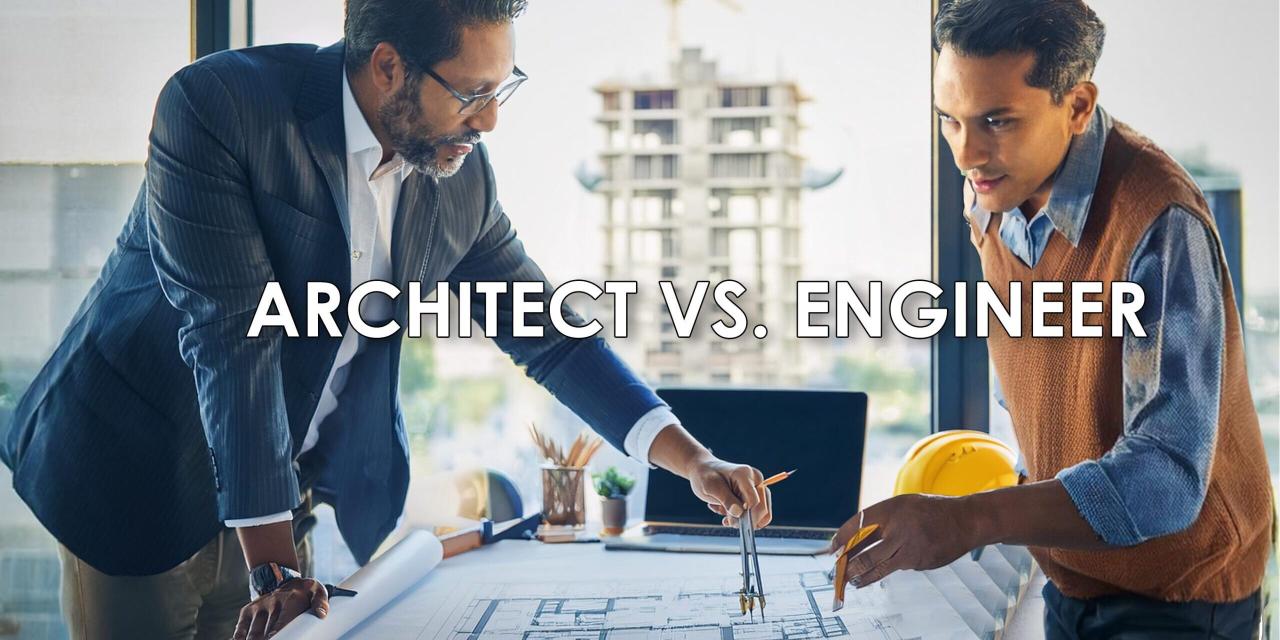
In the vast and complex world of the built environment, two professional titans stand at the forefront of bringing structures from mere concepts into tangible reality: the Architect and the Engineer. While these roles are often mentioned in the same breath and collaborate intimately on every project, their core philosophies, responsibilities, and contributions are fundamentally distinct. This comprehensive analysis delves deep into the crucial differences between architects and engineers, exploring their unique mindsets, educational pathways, daily functions, and the synergistic relationship that is absolutely vital for the success of any construction endeavor. Understanding this dichotomy is essential not only for aspiring professionals but also for clients, project managers, and anyone with a stake in the creation of our physical surroundings.
A. Foundational Philosophy: Artistry Meets Analysis
At the heart of the distinction lies a profound difference in primary focus and philosophical approach.
The Architect is fundamentally the visionary artist and humanist of the project. Their primary domain is space, experience, and aesthetics. An architect begins with the human element, asking questions such as: How will people feel and move within this space? How does the building interact with its cultural and environmental context? How can form, light, material, and flow create a specific emotional response or fulfill a poetic narrative? The architect’s sketchbook is filled with explorations of massing, perspective, and spatial relationships. They are the guardians of the project’s conceptual soul, championing creativity, cultural relevance, and experiential quality. For an architect, a building is a statement, a piece of functional art that shapes human life.
Conversely, the Engineer (particularly the structural, civil, or mechanical engineer involved in building design) is the pragmatic scientist and analyst. Their primary domain is logic, safety, and efficiency. The engineer takes the architect’s vision and subjects it to the unyielding laws of physics and mathematics. Their central questions are: Will it stand? How can we make it stable using the most efficient materials and methods? Does it comply with all technical codes and regulations? How will the systems (structural, mechanical, electrical) function optimally? The engineer’s spreadsheet and calculation software are their primary tools. They are the guardians of the project’s physical integrity, championing safety, cost-effectiveness, and technical feasibility.
In essence, the architect dreams of what could be, while the engineer figures out how it actually can be.
B. Educational and Licensing Pathways: Studio versus Lab
The divergence begins in academia, where distinct curricula shape these different mindsets.
Architectural Education is a rigorous blend of the artistic and the technical, typically culminating in a Bachelor of Architecture (B.Arch) or Master of Architecture (M.Arch) degree. The core of this education is the design studio, a hands-on, critique-based environment where students spend countless hours developing projects, creating physical models, and producing elaborate drawings and renderings. Courses in architectural history, theory, environmental design, and building materials complement this studio work. Following degree completion, aspiring architects must complete a prolonged period of supervised practical experience (often called an internship) and pass the rigorous, multi-division Architect Registration Examination (ARE) to become licensed practitioners.
Engineering Education for fields like civil, structural, or mechanical engineering is deeply rooted in advanced mathematics and physical sciences. Degrees include a Bachelor of Science in Engineering (B.S.E.) with a specific discipline focus. The curriculum is heavily loaded with calculus, physics, thermodynamics, statics, dynamics, and materials science. Laboratory work and problem-set analysis dominate the learning experience. While design projects are included, they are overwhelmingly analytical. Licensure involves first passing the Fundamentals of Engineering (FE) exam, gaining four years of supervised work experience, and then passing the Principles and Practice of Engineering (PE) exam to become a Professional Engineer.
C. Core Responsibilities and Deliverables: From Concept to Calculation
On a day-to-day basis, the outputs and tasks of these professionals vary significantly.
The Architect’s Key Responsibilities Include:
A. Client Programming and Needs Analysis: Translating a client’s dreams, needs, and budget into a spatial program (list of required spaces and their sizes).
B. Conceptual and Schematic Design: Generating the initial creative vision through sketches, massing models, and preliminary floor plans.
C. Design Development: Refining the design, selecting materials, and defining the overall aesthetic character.
D. Creating Construction Documents: Producing the detailed set of drawings (plans, elevations, sections) and specifications that legally describe the design intent for construction. These are the architect’s primary instruments for communication.
E. Client Representation and Aesthetic Oversight: Acting as the client’s agent, ensuring the built work aligns with the approved design, and making aesthetic judgments during construction.
F. Focus on Envelope and Space: Concentrating on the building’s exterior shell (façade, roof) and the interior spatial layout, finishes, and ambiance.
The Engineer’s Key Responsibilities Include:
A. Structural Analysis and Design: Calculating loads (dead, live, wind, seismic) and designing the structural system (beams, columns, foundations, slabs) to ensure stability and safety.
B. Systems Design and Integration: Planning the complex web of mechanical (HVAC), electrical, plumbing, and often fire protection systems.
C. Material Specifications and Quantities: Determining the exact grades, strengths, and quantities of materials (e.g., concrete PSI, steel rebar size) needed.
D. Technical Calculations and Modeling: Using advanced software (like Finite Element Analysis tools) to simulate stress, airflow, heat transfer, and energy consumption.
E. Code Compliance and Risk Mitigation: Ensuring every aspect of the design meets stringent local and international building codes to minimize liability and ensure public welfare.
F. Focus on Systems and Performance: Concentrating on the hidden, yet vital, networks that make a building functional, safe, and efficient.
D. The Crucial Intersection: Collaboration and Conflict
The most successful projects are not battlegrounds but theaters of collaboration. The relationship between architect and engineer is symbiotic.
The Collaborative Process: It begins with the architect’s concept. Early in schematic design, the engineer is consulted to provide feedback on feasibility. Can this dramatic cantilever be achieved? What are the implications for the column grid? This dialogue creates an iterative process where the design evolves through a series of creative compromises. The engineer might propose a structural system that becomes an aesthetic feature (like exposed diagrids or graceful arches), and the architect might adjust a form to achieve better seismic performance. Their tools converge in Building Information Modeling (BIM) software, where a shared 3D model contains both aesthetic and technical data, allowing for clash detection and integrated coordination.
Potential Friction Points: Conflict can arise when the priorities clash. An architect’s desire for vast, column-free spaces may push structural limits and budgets. An engineer’s most efficient solution might be an aesthetic eyesore in the architect’s view. The mark of true professionals is the ability to communicate across this philosophical divide, respecting each other’s expertise to find innovative solutions that satisfy both art and science.
E. Specializations and Sub-Disciplines
Both fields branch into numerous specializations, further refining their roles.
Within Architecture:
A. Residential Architect: Focuses on homes and living spaces.
B. Commercial Architect: Designs office buildings, retail spaces, and hotels.
C. Industrial Architect: Specializes in factories, warehouses, and logistics centers.
D. Landscape Architect: Focuses on outdoor spaces, parks, and site ecosystems.
E. Interior Architect/Designer: Specializes in the interior environment, fixtures, and furnishings.
F. Sustainable Design Architect: Experts in green building standards and environmental integration.
Within Engineering (related to construction):
A. Structural Engineer: The primary counterpart to architects, focused exclusively on the building’s framework and stability.
B. Civil Engineer: Deals with the broader site context: grading, utilities, drainage, and infrastructure.
C. Mechanical Engineer (MEP): Designs heating, ventilation, air conditioning (HVAC), and sometimes plumbing.
D. Electrical Engineer (MEP): Plans power distribution, lighting systems, and communications wiring.
E. Geotechnical Engineer: Analyzes soil and rock conditions to design appropriate foundations.
F. The Ultimate Synthesis: The Architectural Engineer
A fascinating hybrid role that embodies the intersection of these fields is the Architectural Engineer. This professional holds an engineering degree but with a specialized focus on building systems integration. They are uniquely positioned to understand both the architectural intent and the engineering constraints at a deep level, often acting as a superb translator and coordinator between the two traditional disciplines. They excel in managing the technical integration of complex systems within the architectural envelope.
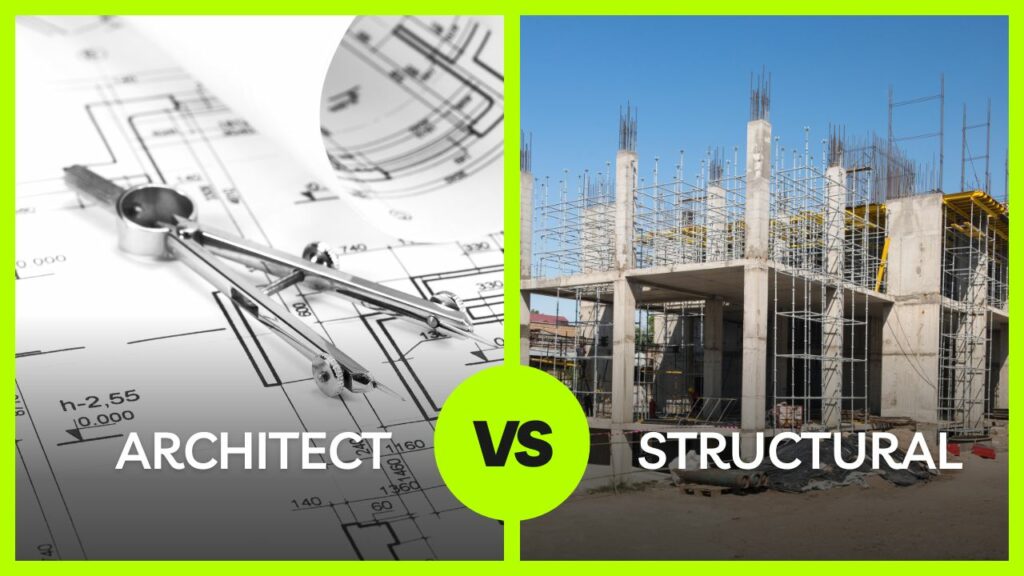
G. Making the Choice: Which Career Path is Right for You?
This in-depth comparison should guide individuals considering these professions. Ask yourself:
-
Do you thrive on open-ended creative expression and philosophical discourse about space? Architecture may call to you.
-
Do you excel at solving well-defined problems using mathematics and physics, deriving satisfaction from optimal solutions? Engineering might be your path.
-
Are you fascinated by both and wish to be the crucial integrator? Explore Architectural Engineering or dual-degree programs.
Conclusion: A Symphony, Not a Solo
The construction of a building is not a linear process but a complex symphony. The architect composes the melody the overarching theme and emotional journey. The engineer orchestrates the harmony the underlying structure that supports and enriches the melody. One without the other results in either a beautiful but unstable sculpture or a safe but soulless box. The magic of our greatest buildings from ancient cathedrals to modern skyscrapers lies in the respectful, challenging, and brilliant collaboration between the architect’s visionary art and the engineer’s pragmatic science. They are two sides of the same coin, both indispensable in the eternal human endeavor to shape our world. Understanding their distinct languages is the first step in appreciating the marvels of the built environment that surround us every day. For clients and collaborators, investing in this powerful partnership from a project’s inception is the single most reliable predictor of achieving a result that is not only sound and functional but also inspiring and enduring.