
In the realm of high-stakes construction and visionary urban development, the fees commanded by the world’s premier architectural firms often elicit a blend of awe and incredulity. To the uninitiated, figures reaching tens of millions of dollars for “design services” can seem exorbitant. However, these costs represent not merely payment for blueprints, but the premium value of artistic genius, technical mastery, brand equity, and profound risk management that transforms ambitious dreams into tangible, iconic realities. This exploration delves into the multifaceted justification behind the world’s most expensive architecture fees, examining the key players, the intricate breakdown of costs, and the undeniable value they deliver to projects that define city skylines and cultural heritage.
The Anatomy of an Architectural Fee: Beyond Blueprints
Architectural fees for elite firms are rarely a simple percentage or flat rate. They are complex investments covering a vast ecosystem of creativity and precision engineering.
A. The Phased Approach to Premium Service
Top-tier firms engage in a comprehensive, multi-stage process, each phase meticulously staffed and managed.
-
Pre-Design & Conceptualization: This is the genesis of genius. It involves extensive site analysis, feasibility studies, and the birth of the conceptual design. For star architects, this is where their unique artistic vision often through sketches and initial models is established. This phase sets the project’s trajectory and intellectual property value.
-
Schematic Design: The concept evolves into initial architectural solutions. Floor plans, spatial relationships, and preliminary massing models are developed. Client feedback is integrated, and the project’s aesthetic and functional identity solidifies.
-
Design Development: Materials, systems, and architectural details are specified. Advanced computer modeling and renderings provide a clearer picture. Engineering consultants (structural, MEP) begin their coordination.
-
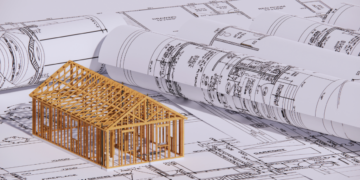
Construction Documents: This is a Herculean task for complex buildings. Highly detailed drawings and technical specifications are produced the legal documents used for permitting and construction. The precision required to avoid costly errors is immense.
-
Bidding & Negotiation: The architect assists in selecting contractors and reviewing bids to ensure alignment with the design intent and budget.
-
Construction Administration: The architect’s role as the client’s advocate continues on-site. They review submittals, conduct site visits, address RFIs (Requests for Information), and certify payments. This oversight is critical to ensuring the built form matches the design vision.
B. The Cost Drivers of Elite Architectural Design
Multiple factors converge to escalate fees to premium levels.
-
The “Starchitect” Premium: Firms led by Pritzker Prize winners or globally recognized icons (e.g., the legacies of Zaha Hadid, Frank Gehry) carry a brand value. Their name alone can increase real estate valuation, attract tenants, and create cultural landmarks. Clients pay for this transformative brand equity.
-
Unparalleled Design Innovation: These firms don’t follow trends; they set them. Their work involves pioneering new forms, materials, and construction techniques. The research, prototyping, and advanced computation (like parametric design) required are intensely resource-heavy.
-
Technical Complexity and Engineering Integration: Designing a twisting tower, a cantilevered museum wing, or an acoustically perfect concert hall requires solving unprecedented engineering challenges. The architectural fee encompasses leading a small army of specialized consultants to make the impossible buildable.
-
Project Scale and Uniqueness: Mega-projects like airports, cultural capitals, and corporate headquarters involve millions of square feet and budgets in the billions. The architectural coordination, management, and liability are exponentially greater.
-
Liability and Insurance: The financial risk and professional liability undertaken by the lead architect on a billion-dollar project are staggering. Their malpractice insurance costs are correspondingly high, a factor baked into their fees.

Profiles in Premium: Architects Who Command Top Fees
While exact fee schedules are confidential, industry analysis consistently points to a echelon of firms renowned for their high-value, high-cost services.
A. Zaha Hadid Architects (ZHA)
Carrying forward the legacy of the late Dame Zaha Hadid, the firm is synonymous with audacious, neo-futurist design characterized by sweeping curves and complex geometries. Their projects, like the Heydar Aliyev Center in Baku or the Beijing Daxing International Airport, are feats of digital design and material innovation. The fee premium is for their proprietary design research and ability to translate radically organic forms into constructible edifices using cutting-edge digital tools and materials.
B. Foster + Partners
Led by Norman Foster, this practice is a master of high-tech, sustainable, and supremely efficient design. Their portfolio includes iconic structures like the Gherkin (30 St Mary Axe) in London and Apple Park in Cupertino. Their fees reflect a “total design” approach, where they often control interior design, product design, and master planning with relentless attention to detail, performance, and environmental integration. Their deep investment in in-house sustainability research commands a premium.
C. Frank Gehry Partners
Frank Gehry’s deconstructivist style, seen in the Guggenheim Museum Bilbao and the Walt Disney Concert Hall, involves sculptural, fragmented forms clad in unconventional materials like titanium. The fee structure accounts for the extensive physical modeling, custom fabrication engineering, and close collaboration with contractors required to execute these one-of-a-kind artistic statements that become economic catalysts for entire regions.
D. Renzo Piano Building Workshop
Piano, the architect of the Shard in London and the Whitney Museum in New York, is known for his “high-tech lightness” and sensitivity to context. His fees are justified by an obsessive focus on material honesty, tectonic clarity, and environmental responsiveness. The workshop model involves meticulous prototyping and testing of building components, ensuring elegance, durability, and performance.
E. Santiago Calatrava
An engineer and architect, Calatrava designs structures that resemble organic skeletons, blurring the line between art, architecture, and engineering. Projects like the World Trade Center Transportation Hub in New York involve moving elements and complex structural ballet. His fees encompass the dual expertise of architecture and pioneering structural engineering, with each project pushing the boundaries of both disciplines.
The Hidden Value Proposition: Why Clients Pay the Premium
The return on investment for hiring a top-tier firm extends far beyond shelter or function.
A. Economic Catalyst and Brand Elevation
A iconic building by a famous architect becomes an instant landmark. It drives tourism, attracts premium commercial tenants, and increases property values for the entire surrounding area. The “Bilbao Effect,” named after Gehry’s museum that transformed a declining Spanish city, is the ultimate testament. Corporations use flagship architecture to project innovation, stability, and cultural sophistication.
B. Long-Term Performance and Sustainability
Premium architects design for legacy. Their focus on durable materials, energy efficiency, and adaptive flexibility ensures the building remains functional, valuable, and beautiful for decades. This life-cycle cost savings often outweighs the initial higher design fee. Their sustainable designs can lead to significant operational savings in energy and water use.
C. Risk Mitigation and Project Certainty
Experienced firms have navigated every conceivable construction challenge. Their rigorous processes, superior documentation, and seasoned construction administration minimize the risk of delays, budget overruns, and legal disputes. For a client investing hundreds of millions, paying extra for this assurance is a prudent business decision.
D. Cultural and Social Capital
Governments and institutions commission these architects to create cultural symbols—libraries, museums, concert halls that define civic identity and pride. The architectural fee is an investment in cultural heritage and social legacy, creating spaces that inspire communities for generations.
Navigating Fee Structures: How Elite Architects Bill
Understanding how these fees are structured demystifies the final number.
A. Percentage of Construction Cost
This is common but scales dramatically with project budget. A lower percentage on a $500 million project yields a far larger fee than a higher percentage on a $50 million project. For mega-projects, the percentage may be negotiated downward on a sliding scale.
B. Fixed Fee or Lump Sum
Often used when the project scope is very clearly defined from the outset. This requires immense trust and clear contract terms to handle scope changes. It provides budget certainty for the client.
C. Hourly or Time-Based Fee
Sometimes used for specific phases, consultations, or projects with uncertain scope. Senior partner hours are billed at rates that can exceed $500/hour, reflecting their decades of experience.
D. Cost-Plus Fee
The architect is reimbursed for direct costs (salaries, travel, models) plus a fixed fee or percentage for profit. This requires high transparency but can align interests on complex projects.
Invariably, contracts with top firms are hybrids, with different structures for different phases, and always include detailed schedules for additional services.
The Future of Architectural Value in a Digital Age
The profession continues to evolve, with technology both disrupting and enhancing value. Building Information Modeling (BIM), virtual reality, and AI-assisted design are becoming standard tools, even at elite firms. However, the human element the creative vision, the aesthetic judgment, the ability to synthesize art and science remains irreplaceable and the core of the premium fee. The future may see fees increasingly reflect value derived from data-driven building performance, lifecycle management, and the architect’s role as a master integrator of smart building technologies.
In conclusion, the world’s most expensive architecture fees are not mere costs but strategic investments. They purchase a rare convergence of artistic vision, technical problem-solving, brand power, and risk management that turns capital into cultural and economic capital. These fees fund the relentless pursuit of innovation, the assurance of quality, and the creation of legacies in steel, glass, and stone. In a world of commoditized design, the work of these masters reminds us that exceptional architecture the kind that moves the spirit and defines epochs is, and will always be, priceless. The client is not just paying for a building; they are funding a landmark, securing an economic engine, and commissioning a piece of history.