The architectural profession stands on the precipice of its most profound transformation in centuries. No longer is the primary mandate merely to create aesthetically pleasing, functional, or even iconic structures. Today, the undeniable realities of climate change rising global temperatures, intensifying weather extremes, resource scarcity, and biodiversity loss demand a radical re-evaluation of how we design, construct, and inhabit our built environment. The role of the architect is evolving from that of a form-giver to a steward of ecological balance, a systems thinker, and a community advocate for resilience. This article delves into the multifaceted imperative for a new breed of architects, exploring the principles, technologies, and philosophies that must define 21st-century design to forge a sustainable, adaptive, and equitable future. The call is not for incremental adjustment but for a fundamental paradigm shift where every architectural decision is measured against its environmental and social impact.
The Imperative for Change: Data and Urgency
The construction and operation of buildings are responsible for approximately 37% of global energy-related carbon dioxide emissions, according to the United Nations Environment Programme. This staggering figure encompasses both operational carbon (emissions from heating, cooling, lighting, and powering buildings) and embodied carbon (emissions from manufacturing materials, construction processes, and end-of-life demolition). As global populations urbanize, the world is expected to add 230 billion square meters of new construction by 2060 the equivalent of adding another New York City every month for 40 years. Continuing with business-as-usual design practices would lock in catastrophic levels of emissions for decades, making climate goals unattainable. Furthermore, buildings and cities are increasingly vulnerable to climate impacts: flooding, extreme heat, wildfires, and stronger storms threaten infrastructure and human safety. Architecture, therefore, is not just part of the problem; it must be central to the solution, requiring a new ethos grounded in science, empathy, and long-term thinking.
Core Pillars of Climate-Conscious Architecture
The new architectural paradigm rests on several interconnected pillars that move beyond greenwashing to genuine sustainability.
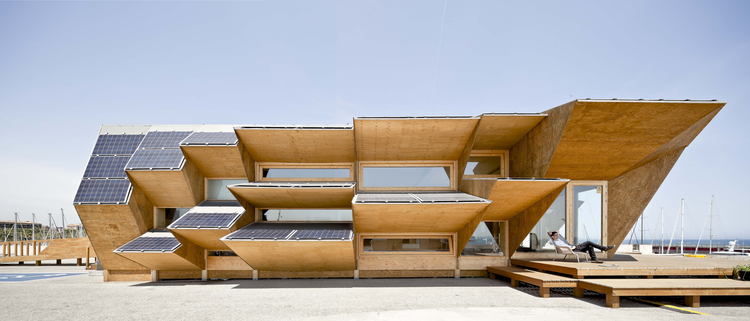
A. Carbon-Neutral and Carbon-Positive Design: The ultimate goal is to eliminate the carbon footprint of buildings. This involves a stringent hierarchy: first, radically reducing energy demand through super-efficient design (passive house principles, superior insulation, strategic orientation); second, powering remaining needs with on-site or nearby renewable energy (solar, wind, geothermal); and third, using low- or negative-carbon materials to address embodied carbon. The ambition is to create buildings that, over their lifecycle, are carbon-positive, generating more clean energy than they consume and sequestering carbon through biogenic materials.
B. Circular Economy and Material Innovation: Moving away from the take-make-waste linear model, circular architecture prioritizes reuse, recycling, and regeneration. This includes designing for deconstruction, specifying materials with high recycled content, and embracing innovative substances like mycelium-based composites, hempcrete, and carbon-sequestering cross-laminated timber (CLT). Architects must become material librarians, understanding the full lifecycle impact of every component, from sourcing to disposal or reuse.
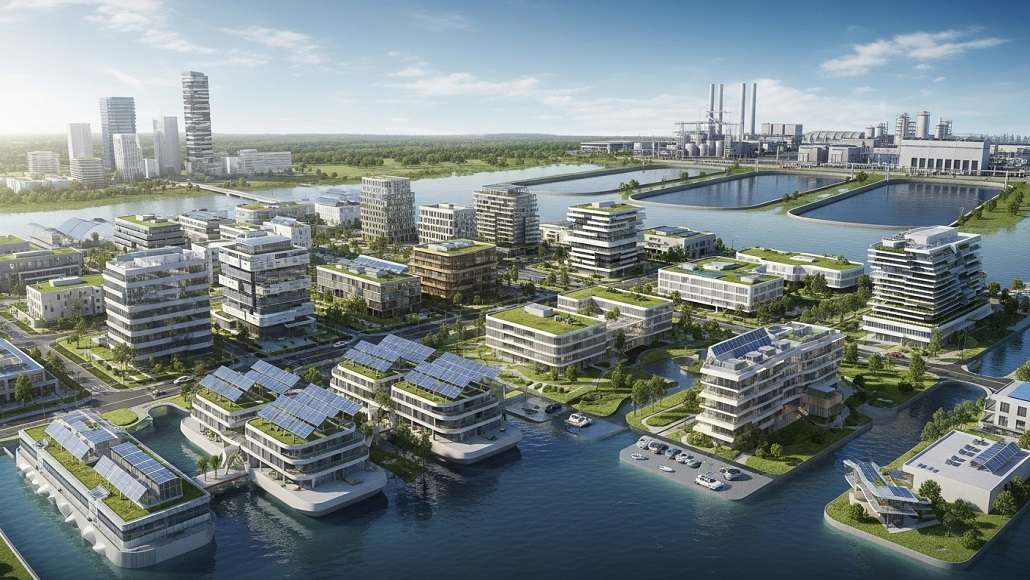
C. Biophilic and Regenerative Design: This approach seeks to reconnect humans with nature within the built environment, not just for well-being but for ecological function. It integrates natural lighting, ventilation, vegetation (through green roofs, living walls, and urban gardens), and water features. Regenerative design goes further, aiming for projects that actively restore and enhance local ecosystems, improve biodiversity, and regenerate soil and water systems, leaving the site healthier than before construction.
D. Resilience and Adaptive Capacity: Climate-resilient architecture anticipates and plans for future disruptions. This means elevating structures in flood-prone zones, designing for passive survivability (maintaining safe conditions during power outages), using materials that can withstand extreme heat or high winds, and incorporating greywater recycling and rainwater harvesting for water security. Resilience is also social, ensuring designs foster community cohesion and provide safe havens during crises.
E. Equity and Just Design: The climate crisis disproportionately affects marginalized communities. New architects must be advocates for environmental justice, ensuring sustainable design is not a luxury but a universal benefit. This involves engaging communities in participatory design processes, creating healthy, affordable housing, improving access to green spaces and clean transportation, and retrofitting existing inefficient buildings to reduce energy poverty.
Technological Enablers and Design Tools
The vision for climate-responsive architecture is made feasible by advanced technologies.
A. Performance Modeling and Simulation: Sophisticated software allows architects to simulate a building’s energy performance, daylighting, thermal comfort, and airflow long before construction begins. Tools like computational fluid dynamics (CFD) and energy modeling enable iterative, optimized designs that respond precisely to local microclimates.
B. Building Information Modeling (BIM) and Lifecycle Analysis: BIM creates intelligent 3D models enriched with data on every material and system. When integrated with Environmental Product Declarations (EPDs) and lifecycle assessment (LCA) tools, it allows architects to calculate and minimize the total embodied carbon of a project from the earliest design stages.
C. Smart Building Systems and IoT: The Internet of Things (IoT) enables buildings to become responsive organisms. Networks of sensors can optimize energy use in real-time, managing lighting, heating, and cooling based on occupancy and weather forecasts, thereby dramatically reducing operational carbon.
D. Advanced Fabrication and Construction: Robotics, 3D printing, and prefabrication offer pathways to reduce material waste, improve precision, and enable the use of complex forms or novel materials that are more efficient or sustainable.
Educational and Professional Transformation
Cultivating this new architect requires overhauling architectural education and licensure. Curricula must integrate deep coursework in environmental science, building physics, material ecology, and social equity alongside traditional design studios. Continuing education for practicing professionals is critical to update skills. Professional accreditation bodies are increasingly emphasizing sustainability competencies, and a growing number of firms are adopting frameworks like the AIA’s Committee on the Environment (COTE) metrics or the Living Building Challenge to guide their work.
Case Studies in Pioneering Practice
Examining real-world applications illuminates the path forward. Consider the Bullitt Center in Seattle, USA, hailed as one of the world’s greenest commercial buildings. It functions as a “living building,” generating its own solar power, capturing and treating rainwater, and using composting toilets, achieving net-positive energy and water. Another exemplar is the Shanghai Tower in China, whose twisting form and double-skin façade reduce wind loads and energy consumption by 21%. In Africa, the story is one of contextual innovation, such as the Eastgate Centre in Harare, Zimbabwe, which uses termite-mound-inspired passive cooling, eliminating the need for conventional air conditioning. These projects demonstrate that climate-responsive architecture is viable across scales and geographies, from high-tech towers to low-tech, biomimetic solutions.

Addressing Challenges and Barriers
The transition faces significant hurdles. Higher upfront costs for advanced systems and materials, despite long-term savings, remain a barrier. Outdated building codes and zoning regulations often impede innovative sustainable design. There is also a skills gap in the construction industry and a persistent perception that sustainable design is optional or purely aesthetic. Overcoming these challenges demands policy reform (like stricter building codes and carbon pricing), financial incentives (tax breaks, grants), client education, and architects boldly championing performance-based design over mere form.
Conclusion: The Architect as Planetary Healer
The climate crisis presents architecture with a non-negotiable mandate: to cease being a net contributor to environmental degradation and become a driving force for regeneration and resilience. The new architect is therefore a synthesist melding artistry with ecology, technology with tradition, and global awareness with local action. This is not a niche specialty but the future core of the profession. By embracing carbon-neutral design, circular material flows, biophilic integration, and social equity, architects can design not just shelters for humanity but harmonious habitats for all life. The blueprint for a livable future is ready to be drawn; it requires the courage, creativity, and conviction of a reinvented architectural profession to bring it into being.